Submitted by Padmanaban Rajagopalan
Disclaimer: Readers are encouraged to share their views on ongoing political, social, and environmental issues. Opinions expressed in submitted articles are solely those of the authors and do not reflect the views or positions of the publisher. The publisher is not responsible for any impact or consequences resulting from the publication of these articles.
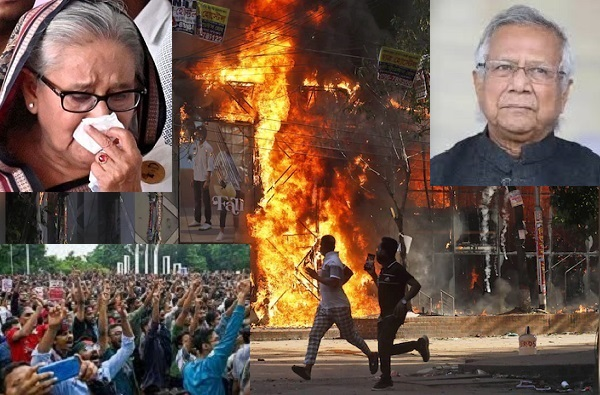
Before the people’s revolution, the military knelt. The iron lady, Bangladesh’s Prime Minister Sheikh Hasina, who once boasted of her strength, crumbled before the power of the people. Following Modi’s approach closely, Hasina fled to India out of fear for her life. What is happening in Bangladesh?
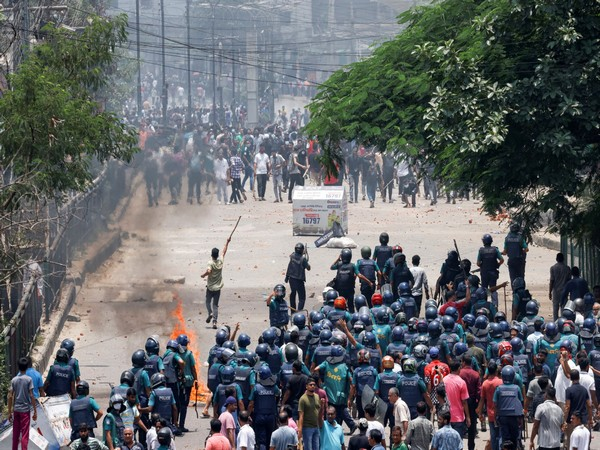
Students rose against Sheikh Hasina’s anti-people authoritarian regime. To suppress the student protests, police acted harshly under Hasina’s orders, employing batons and firearms. Consequently, attacks on police stations across Bangladesh saw around 500 stations ransacked. Despite the army’s gunfire, the protests couldn’t be contained. Former military chiefs stepped in, urging the troops not to attack the people. The military refused to listen to the Prime Minister and stretched out their hands, stating they couldn’t protect her. Hasina has taken refuge in India.
Hasina’s downfall today was not unexpected. She assumed the Prime Minister’s position for the fourth time in January 2024, following a rigged election boycotted by major opposition parties.
The student protests, which opposed a 30% reservation for the relatives of those who participated in the 1971 Bangladesh Liberation War, actually marked the beginning of the people’s uprising against Hasina’s government’s mismanagement.
Since 2009, the Awami League and its leader Sheikh Hasina have been credited by some for lifting Bangladesh’s economy. However, this growth has not been evenly distributed. Rising unemployment, Hasina’s authoritarian tendencies, imprisoning opposition leaders and workers, and stifling dissent through false cases have stirred great anger among the people. With no freedom to express their discontent, the student protest became an outlet for all grievances.
Bangladesh, once known as East Pakistan, fought against Pakistani autocratic rule for democratic rights, particularly when the central government prevented Mujibur Rahman, who won the election, from assuming power in 1971.
Mujibur Rahman was deceitfully arrested and imprisoned, and the Pakistani military crackdown on the people of East Pakistan led to the Bangladesh Liberation War. India, under Prime Minister Indira Gandhi, supported the freedom fighters, resulting in the defeat of the Pakistani military, the creation of Bangladesh, and Mujibur Rahman becoming its Prime Minister.
The Mukti Bahini guerrilla fighters, recognized as freedom fighters by the Mujib government, were given employment reservations. This policy later faced corruption as Awami League members’ names were added to the freedom fighters’ list, turning the reservation into a party benefit.
Voices against this policy were raised long ago. The Hasina government suspended this reservation in 2018. In June 2024, the Bangladesh High Court reinstated it, sparking the student protests that began on June 6.
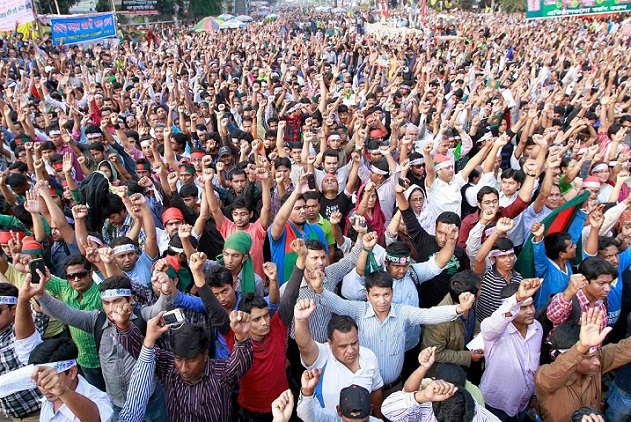
Prime Minister Sheikh Hasina, at the height of her arrogance, did not appease the protesting students. Instead of addressing them, she labeled them as traitors (Razakar) and unleashed violence against them.
Hasina deployed members of the Chhatra League (the Awami League’s student wing) against the protesters. She labeled dissenters as anti-national and arrested them, cutting off internet services and censoring the media.
Before this, opposition parties had already been suppressed through false cases, with their leaders imprisoned, including former Prime Minister Khaleda Zia of the BNP, who was denied medical care in prison.
Mirroring Modi’s tactics, who tried to suppress the farmer protests in India, Hasina’s government courted corporations, suppressed protests, misused power for her supporters, and censored the media. She maintained a facade of secularism while fostering religious extremism, aligning closely with Modi’s government, which antagonized Bangladeshis.
Nobel laureate and economic expert Muhammad Yunus, who illuminated the lives of Bangladeshis through Grameen Bank, was imprisoned by Hasina under false charges for criticizing her anti-democratic actions. His persecution increased public sympathy for him.
Despite winning the January election unopposed, Hasina’s regime failed to quell the anger from policies favoring India over Bangladesh, especially in power agreements with Indian corporations and controversial water-sharing deals.
In brutal police and Chhatra League attacks, over 300 students were killed, and thousands injured. This violence united the people against Hasina, whose reliance on Indian support further incited public rage. Thus, the call for Hasina’s resignation has become a demand for the end of her rule as an Indian puppet.
Media houses that praised Hasina have been set ablaze by the people. More than 20 Awami League leaders have been killed by protesters.
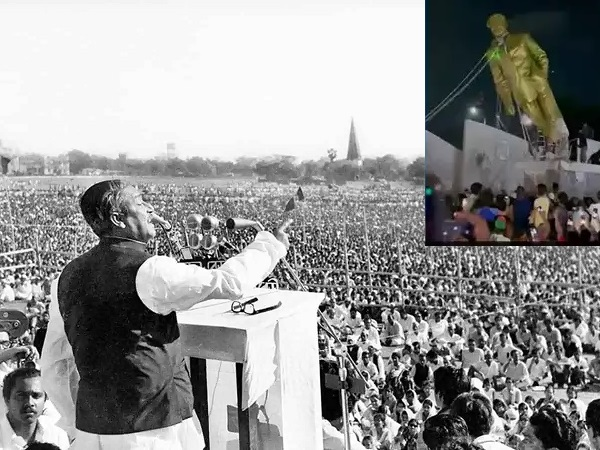
Image: Mujibur Rahman
Several international countries and the UN Secretary-General have urged for an end to the violence and welcomed the forthcoming change.
Hasina’s refuge in India and the BJP’s indifference to the attacks on minority Hindus in Bangladesh reveal their double standards.
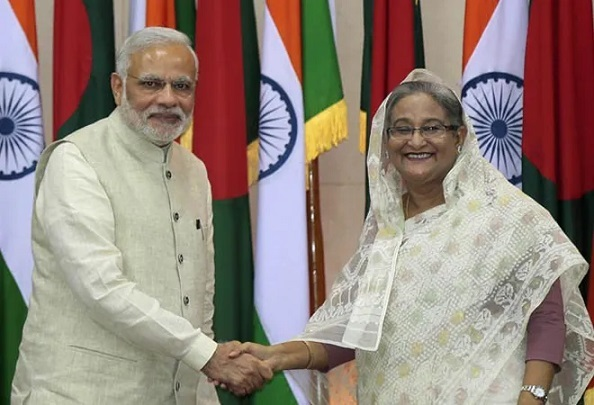
Image: Modi with Hasina
Some media speculate on whether the upcoming government will be favorable to India, stressing that Hasina’s resignation is not beneficial for Indian national interests.
The Bangladesh Communist Party’s assertion that the unrest is an American imperialist conspiracy shows how out of touch they are with the people’s movement.
In this situation, Nobel laureate Muhammad Yunus has been appointed interim leader at the protesters’ request. Yunus, with his international economic and banking expertise, serves as an advisor and ambassador at the ongoing Paris Olympics. His appointment has been well-received by the people.
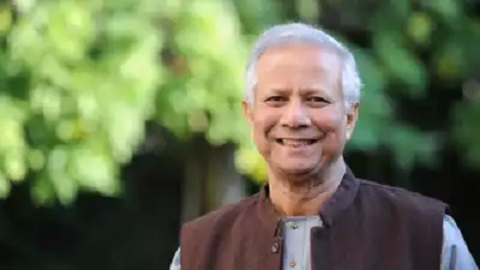
Image: Muhammad Yunus
It is unfortunate that no prominent people’s leader has emerged from this revolution. Let’s see what happens next.
Original article written by Cha. Arunachalam in Tamil published on Aramonline.in and translated by Padmanaban Rajagopalan.
This news is brought to you by: