


The ongoing conflict between the RSS and Modi is sparking discussions against a backdrop of varying opinions: some assert that “BJP will undoubtedly secure another term with a solid majority,” while others claim “BJP stands no chance,” and some dismiss Modi’s rhetoric as “nonsense, driven by fear of defeat.”
Talk of a clash between the Modi-Amit Shah alliance and the RSS might be dismissed as mere hearsay or propaganda from the opposition. After all, the RSS is the cornerstone of the BJP, and Modi owes his rise to the organization. The idea of a rift seems implausible to many.
The current BJP isn’t beholden to any single figure.
However, the allure of power and wealth can corrupt anyone. This seems to be the case with Modi. Even during the Vajpayee and Advani era, while both were towering figures, they abided by party decisions and respected RSS guidelines. Back then, the BJP boasted numerous prominent leaders like Murali Manohar Joshi, Yashwant Sinha, Subramanian Swamy, Arun Shourie, Uma Bharti, and Govindacharya. The party also welcomed external figures like George Fernandes.
Personal charisma has always played a pivotal role in Indian politics. Leaders like Nehru, Indira Gandhi, MGR, and Karunanidhi wielded immense influence due to their charisma. Modi was groomed with the hope of finding an individual leader under the RSS’s control.
However, Modi, lacking self-awareness and efficiency initially, developed a superiority complex to mask his inferiority complex and assert dominance. Consequently, he marginalized senior leaders like Advani, Joshi, Sinha, Shourie, and Swamy. Despite public criticism from the latter three, Modi maintains his position, buoyed by media support.
While the RSS disapproved of many of Modi’s traits, they continued to support him, believing it was for the greater cause. The sacrifices Modi made for the RSS further endeared him to the organization.
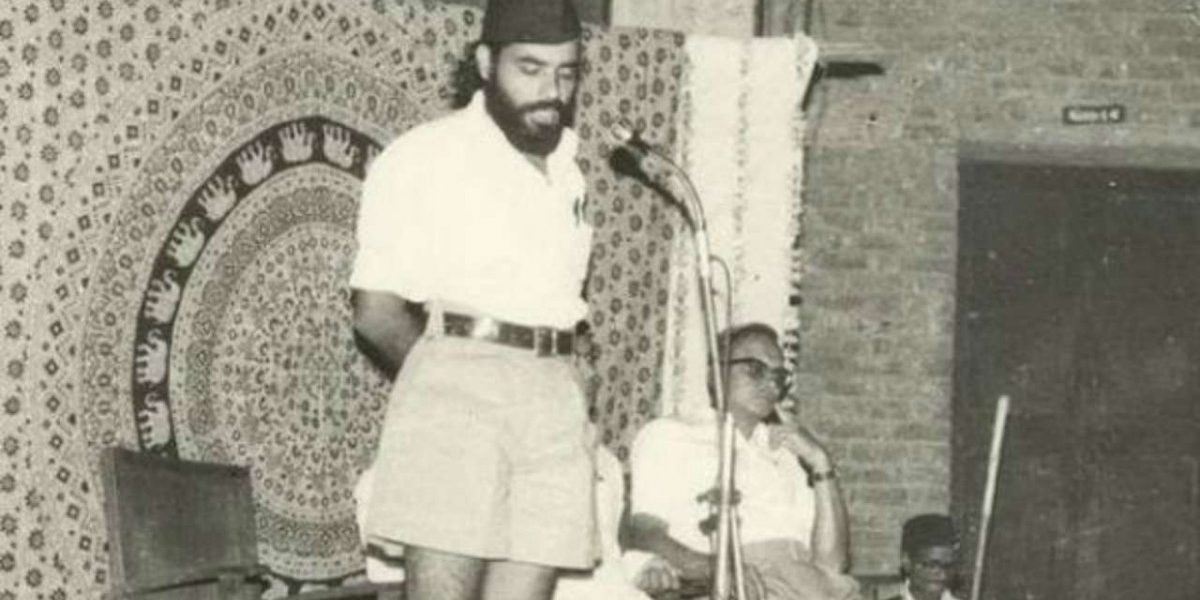
A young Narendra Modi at an RSS event. Photo: narendramodi.in
Despite the RSS’s emphasis on simplicity, Modi’s affinity for luxury clashed with their values. Modi’s childhood friend, Praveen Togadia, criticized him for his extravagance, leading to a fallout.
Their once close friendship turned into bitter enmity. Modi, accumulating enemies within and outside his circle, began to disregard the RSS, leading to escalating tensions.
Modi’s arrogance, fueled by support from Gujarat’s industrialists, led him to believe he was indispensable. This sense of superiority strained his relationship with the RSS.
As a result, he distanced himself from contemporaries like Venkaiah Naidu, Rajnath Singh, and Nitin Gadkari. The Modi-Amit Shah alliance disrupted the status quo, sidelining RSS-recommended candidates in key positions.
The Modi-Amit Shah alliance promoted leaders aligned with them, sidelining those recommended by the RSS. Recent statements by JP Nadda indicate a growing disconnect between BJP leadership and the RSS.
Similarly, in Tamil Nadu, Annamalai, an ardent Modi follower, sidelined senior BJP leaders. Accused of not fostering harmony within the party, Annamalai defended his actions, asserting his loyalty to Modi.
Modi’s exclusion of other leaders from the election campaign shocked many BJP members. The RSS, feeling sidelined, refrained from active participation in the campaign.
RSS leaders, adept at navigating internal conflicts, are quietly strategizing for the post-election phase. They understand Modi’s limitations and are planning accordingly.
Rumors of BJP’s impending defeat after the initial voter registration hint at underlying tensions within the party. Uddhav Thackeray’s ominous warning about Modi’s potential return to power without RSS intervention underscores the seriousness of the situation.
In any case, internal conflicts may hinder Modi’s bid for re-election. The truth will likely emerge after June 4.
Original article published in Aramonline.in on Tamil language, written by Savithri Kannan.
Translated by our special correspondent, Chennai.