

(Translated from the original article published in a vernacular language)

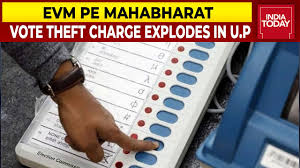
In the contemporary political landscape, there’s a prevailing sentiment among the general public and opposition parties that while defeating the BJP might be feasible, overcoming the formidable obstacle of flawed Electronic Voting Machines
(EVMs) appears insurmountable. This sentiment has been underscored by several Public Interest Litigations (PILs) filed in the Supreme Court, casting doubt on the reliability of EVMs, control units, and VVPAT machines.
These PILs advocate for the mandatory connection of VVPAT machines to all voting machines, with demands for the comprehensive counting and comparison of acknowledgment slips to ensure electoral transparency. However, despite these concerns, the recent verdict issued by a bench comprising Justices Sanjeev Khanna and Dibangar Dutta seemingly downplays the apprehensions, emphasizing the autonomy and reliability of the Election Commission.
Critics, however, have raised pertinent questions regarding the independence of the Election Commission, particularly in light of recent procedural changes made by the BJP government. They argue that blind trust in the electoral process, irrespective of the integrity of the commissioners, is untenable and risks eroding public faith in democracy. Former Election Commissioner S. Y. Qureshi echoes these sentiments, advocating for widespread adoption of VVPATs and acknowledgment slip counting to bolster public confidence.
Meanwhile, Prime Minister Modi’s enthusiastic endorsement of the Supreme Court’s verdict as a triumph for democracy has drawn criticism, particularly in the context of ongoing skepticism surrounding the electoral process. Additionally, concerns have been raised regarding the prolonged duration of the seven-phase election, with suspicions of strategic timing to favor the ruling party.

Balasubramanian Krishnan, Software Engineer.
Balasubramanian Krishnan, a seasoned software engineer, has highlighted potential vulnerabilities in the voting machines, emphasizing the need for rigorous scrutiny and standardization to mitigate any discrepancies.

In essence, while the Supreme Court’s stance on electoral integrity is lauded by some, it also faces scrutiny for potentially overlooking systemic flaws within the electoral framework, thereby necessitating continued vigilance and reform efforts to safeguard the democratic process.
It’s imperative to acknowledge that despite outward similarities, it’s not a guarantee that two electronic voting machines (EVMs) are identical. Just as two smartphones of the same model may appear identical, differences in their software programming can significantly alter their functionality, rendering them essentially distinct.
This truth underscores the critical role of software in dictating the operation of electronic devices, including EVMs. Much like how our household appliances are regulated by software, the behavior of voting machines can also be controlled through programmed instructions.
A concerning possibility arises regarding the integrity of EVMs even after the completion of vote counting and their subsequent sealing. The continued functionality of the control unit, fueled by internal batteries, leaves room for potential manipulation. Instances could arise where votes are surreptitiously added to or subtracted from specific candidates’ tallies, subtly altering the electoral outcome.
To address these concerns, it’s essential to subject a representative sample of EVMs to rigorous testing to ascertain the uniformity of their software programming. This necessitates uploading the existing software onto the machines and comparing them for any discrepancies. Any deviation in software versions not only raises doubts about the reliability of the machines but also undermines the credibility of the electoral process.

Ultimately, blind acceptance of assurances from authorities, including the Supreme Court, without concrete evidence of software uniformity, is untenable. It’s imperative to approach such assurances with skepticism and demand transparent verification processes to safeguard the integrity of the electoral system.
In light of these uncertainties, the Election Commission’s ability to provide assurances regarding the software uploading method becomes paramount. Failure to do so risks eroding public trust in the electoral authorities and calls into question the legitimacy of electoral outcomes.
Courtesy: Aram Online. (Translated from the original article published in a vernacular language)
Top of Form