

Correspondent, Hello Asia News, India
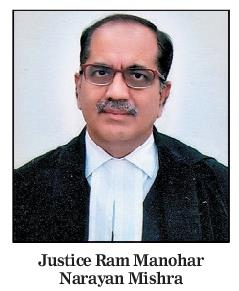
New Delhi, March 27, 2025 – The Supreme Court of India has intervened to stay a controversial ruling by the Allahabad High Court, which had previously held that grabbing a woman’s breasts and pulling the drawstrings of her pajamas did not constitute rape. The apex court, led by Justices B.R. Gavai and Augustine George Masih, described the High Court’s observations as “totally insensitive” and “inhuman,” prompting widespread debate on judicial sensitivity in cases of sexual violence.
The Allahabad High Court’s March 17 verdict, delivered by Justice Ram Manohar Narayan Mishra, had acquitted a minor accused of assault, stating, “In normal circumstances, we are slow in granting stay at this stage. But since the observations in paragraphs 21, 24, and 26 are totally unknown to law and depict total insensitive and inhuman approach, we are inclined to stay the said observations.” The Supreme Court bench, while taking suo motu cognizance of the matter after it was brought to the attention of Chief Justice of India Sanjiv Khanna by the Women of India NGO, expressed deep concern over the ruling’s implications.
“It is a serious matter. Total insensitivity on the part of the judge. This was at the stage of issuing summons! We are sorry to use such harsh words against the judge,” Justice Gavai remarked during the hearing, which commenced on Wednesday. The bench, referring to Justice Ram Manohar Narayan Mishra’s ruling, issued notices to the Centre, the Uttar Pradesh government, and other involved parties, seeking their responses in the suo motu proceedings.
Attorney General R. Venkataramani and Solicitor General Tushar Mehta were directed to assist the Supreme Court, with the matter scheduled for its next hearing on April 15. Additionally, the bench directed the registrar (judicial) of the apex court to communicate its order to the registrar of the Allahabad High Court, emphasizing that the High Court’s ruling should be “immediately” placed before the chief justice for review. The chief justice of the High Court was urged to examine the matter and take appropriate steps as deemed proper.
Tushar Mehta, concurring with the bench, suggested that the administrative head and master of the roster, the chief justice of the Allahabad High Court, “should take some steps” to address the issue, though he did not elaborate further.
The Supreme Court’s decision to stay the Allahabad High Court’s verdict has been met with cautious optimism by activists and legal experts, who see it as a step toward ensuring greater sensitivity in judicial rulings on sexual violence. The case has reignited discussions on the need for gender-sensitive training for judges and the importance of aligning legal interpretations with the lived realities of survivors.