

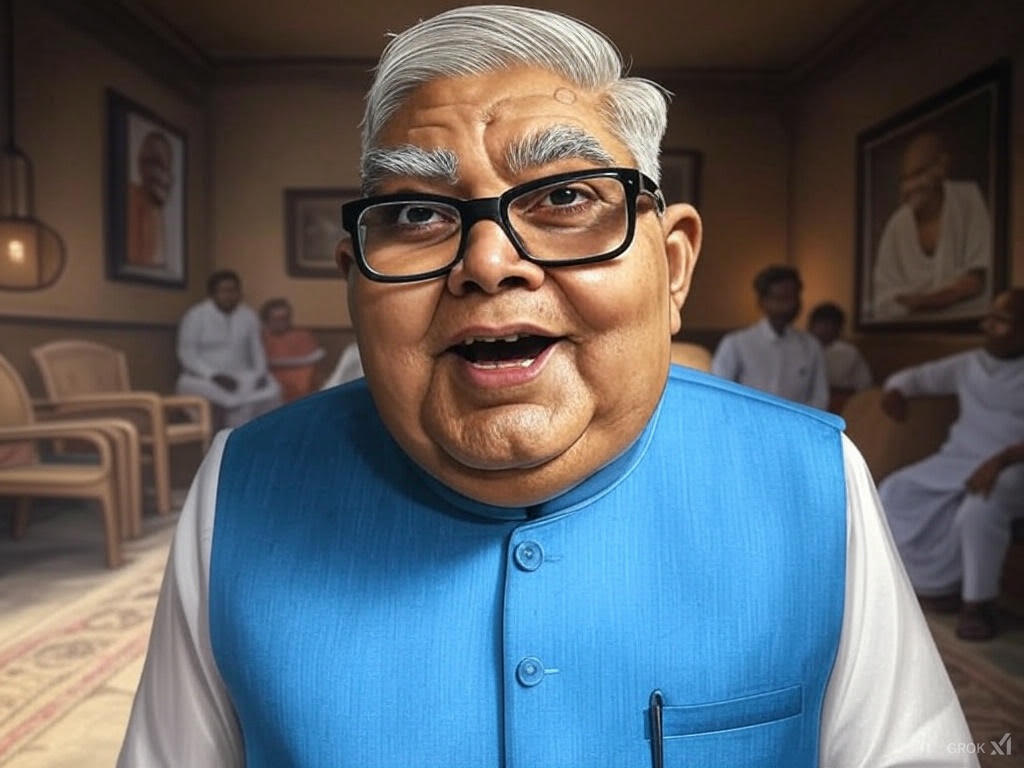
Image: Jagdeep Dhankhar, Vice President of India
Vice President of India, Jagdeep Dhankhar’s recent statement, as reported on Moneycontrol.com on February 20, 2025, that “the best way to conquer a territory is to overtake its culture and destroy its language,” is a profoundly disturbing and retrograde remark that demands fierce condemnation—made all the more egregious by the setting in which it was uttered: a Marathi language conference. To suggest the annihilation of language and culture as a conquest strategy, while addressing an audience gathered to celebrate and preserve the richness of Marathi, is not just hypocritical—it’s a slap in the face to the very people sitting before him. That the Marathi attendees were seemingly incapable of opposing him right away only deepens the outrage, exposing a troubling dynamic of deference or shock in the face of such reckless rhetoric.
In an era where the world champions diversity, inclusion, and the safeguarding of linguistic and cultural heritage, Dhankhar’s words are a grotesque throwback to colonial barbarism. Language is the lifeblood of identity, a vessel for history, wisdom, and community; culture is the pulse of human existence, weaving together traditions and aspirations. To advocate their destruction—especially in a forum dedicated to Marathi, one of India’s proud linguistic treasures—is to endorse a cultural genocide that history has shown us is the hallmark of oppressors, not leaders. The irony is suffocating: a conference meant to uplift a language became a platform for a high-ranking official to casually muse about its potential erasure, and the attendees, perhaps stunned or constrained by protocol, could not muster an immediate rebuttal.
Dhankhar’s framing of this idea as a historical observation, tied to invasions and the overwriting of “our places of worship,” barely masks its insidious implications. Spoken in Maharashtra’s cultural heartland, it’s a divisive dog whistle that risks stoking resentment rather than fostering unity. Worse, it undermines the constitutional duty he himself invoked—to nurture India’s languages and cultures. For Marathi speakers in the room, who have fought to preserve their tongue against centuries of external pressures, this must have felt like a betrayal delivered with a smile. Their silence in the moment—whether from disbelief, decorum, or powerlessness—speaks volumes about the audacity of a Vice President who could utter such venom without fear of instant backlash.
In 2025, when global societies strive to heal the wounds of cultural erasure—reviving lost languages and honoring diverse traditions—Dhankhar’s stance is a shameful anomaly. Destroying language and culture isn’t strength; it’s the cowardice of those too feeble to engage with difference. India, a mosaic of hundreds of languages and cultures, deserves leaders who defend that legacy, not ones who fantasize about smashing it. The Marathi attendees’ lack of immediate opposition doesn’t absolve him; it amplifies the need for a broader, louder rejection of this toxic mindset. This isn’t just a misstep—it’s a disgraceful relic of imperial arrogance, and it has no place in our modern world, let alone at a celebration of linguistic pride.
Submitted by: S. M