

-Padmanaban Rajagopalan, Independent writer, Canada
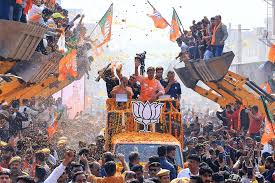
In recent years, India has witnessed a growing phenomenon termed “bulldozer justice,” which signifies the increasing use of bulldozers by certain state governments to demolish properties of individuals accused of participating in protests, riots, or criminal activities. Originally intended to target illegal structures, this practice has now become a political tool, often seen as punitive and targeting specific communities. The Bharatiya Janata Party (BJP)-led governments in states like Uttar Pradesh and Madhya Pradesh have popularized this approach, defending it as a necessary measure to maintain law and order, while critics argue that it bypasses judicial processes and disproportionately affects marginalized groups.
Uttar Pradesh, under Chief Minister Yogi Adityanath, has been the epicenter of bulldozer justice. After the Citizenship Amendment Act (CAA) protests in 2019, several properties belonging to accused rioters were swiftly demolished. Yogi Adityanath, often referred to as “Bulldozer Baba” for his administration’s heavy reliance on this method, framed these demolitions as part of his government’s zero-tolerance policy toward lawlessness. However, the demolitions were carried out without proper legal procedures, leading to allegations that the state was punishing individuals without a fair trial. The affected properties were often in Muslim-majority areas, prompting accusations of communal bias.
Madhya Pradesh followed a similar pattern, especially after communal clashes during religious processions in 2022. The government led by Chief Minister Shivraj Singh Chouhan ordered the demolition of homes and shops linked to those accused of participating in the violence. The state justified the demolitions by claiming that these properties were illegally constructed. However, many questioned the timing of these actions, arguing that bulldozers were used as an instrument of immediate punishment rather than a legal remedy. The affected individuals were rarely given a chance to defend themselves or prove their innocence, further raising concerns about the selective use of this approach.
Other states, such as Gujarat and Delhi, have also seen instances of bulldozer demolitions, albeit on a smaller scale. In Delhi, anti-encroachment drives in economically weaker sections have led to the destruction of homes and businesses. These actions were framed as part of broader urban planning efforts, but the selective targeting of specific communities has drawn criticism. Similarly, in Gujarat, bulldozers were used following communal violence, where the properties of alleged rioters were demolished. In both states, the lack of transparency and legal recourse has been a major point of contention.
The role of the BJP in institutionalizing bulldozer justice cannot be overlooked. Yogi Adityanath’s administration in Uttar Pradesh has effectively turned the bulldozer into a symbol of strong governance, with the BJP using it as a metaphor for its decisive action against crime. However, this practice has disproportionately impacted minorities, particularly Muslims. After protests or communal riots, bulldozers are often dispatched to demolish properties in Muslim-majority areas, fueling accusations that the BJP is using state power to target specific communities. The perception of communal bias has intensified, with opposition parties and human rights organizations calling out the selective nature of these demolitions.
The legality of bulldozer justice is also a matter of serious concern. One of the core principles of any democratic system is that individuals are innocent until proven guilty. In many cases, bulldozers have been sent in before the accused have had an opportunity to present their case in court. Legal experts argue that this practice violates Article 21 of the Indian Constitution, which guarantees the right to life and personal liberty, including the right to a fair trial. Without due process, the destruction of homes and businesses amounts to extra-judicial punishment. Even if the accused are found guilty of illegal activities, the state must follow proper judicial procedures rather than resorting to demolitions as an immediate form of retribution.
In addition to violating due process, bulldozer justice has disproportionately affected marginalized communities, particularly those living in poverty. Most demolitions occur in economically weaker sections, where residents may lack the resources or connections to legally challenge the state’s actions. In Uttar Pradesh and Madhya Pradesh, many of the affected properties belong to Muslims, further fueling allegations that bulldozer justice is a form of communal retribution. The selective targeting of these communities creates an environment of fear and mistrust, deepening existing social divisions.
The humanitarian impact of bulldozer justice is equally severe. Families are often rendered homeless without warning or time to find alternative housing. The destruction of homes and businesses means the loss of livelihoods, leaving many without the means to support themselves. This sudden displacement has long-term consequences, particularly for vulnerable populations who may already be struggling to survive. Human rights organizations have condemned the practice, calling on the government to halt demolitions that lack legal oversight.
In response to growing criticism, several petitions have been filed in the Supreme Court of India, challenging the legality of bulldozer demolitions. In June 2022, the Supreme Court took notice of demolitions in Uttar Pradesh and Madhya Pradesh and questioned whether due process was followed in these cases. The Court asked state governments to provide explanations for their actions, particularly regarding whether legal notices were issued before demolitions were carried out. While the case is ongoing, the Court’s involvement is a crucial step in determining the legality and future of bulldozer justice in India.
As bulldozer justice continues to shape India’s political landscape, it raises fundamental questions about the nature of governance, law enforcement, and justice. While BJP-led governments argue that these actions are necessary to maintain law and order, critics warn that the unchecked use of bulldozers undermines the country’s democratic values. The selective targeting of communities, the lack of due process, and the perception of extra-judicial punishment threaten to erode public trust in India’s legal system. Whether bulldozer justice becomes a permanent feature of state governance or is curbed by judicial intervention will have profound implications for India’s future as a constitutional democracy.